Men’s footwear has been worn in one form or another from ancient times on almost every continent. Predominantly, the primary materials used to make early shoes were soft leather and plant fibers. In some areas where agriculture was the primary source of food and goods, shoes might have been made from many other materials including felt, basketry, or other vegetable materials.
There were varied and diverse designs for early footwear worldwide, often reflecting local geography and climate, the social status of the wearer, and the materials available. In colder, mountainous areas, the shoes worn in antiquity evolved into boots to provide added protection to keep feet warm and dry. In most warmer countries, men wore sandals, some fitted with wooden footbeds or hobnails for extra protection while doing manual labor. Throughout history, sealed shoes made of leather were exclusively worn by the well-to-do. Ceremonial shoes in bronze, studded with stones, were found in the tomb of a young pharaoh. In one form or another, shoes were primarily made of leather and, depending on the wearer’s status, could be lined with fur. Footwear worn by men in the ancient world, especially in Asia Minor, often consisted of boots with wide tops designed to wrap around the calf. Such footwear combined elegant decoration with practicality by protecting the legs of the wearer from vegetation, insects, and animals.
Apart from the various styles of footwear worn by men from the earliest times, they could also be easily categorized into types. The sandal was the simplest, or base design of footwear. Sandals consist of a sole which is held onto the foot by a strap passing through, or over, the instep. The boot is a style of footwear which, by definition, primarily covers the foot and all or most of the lower leg.
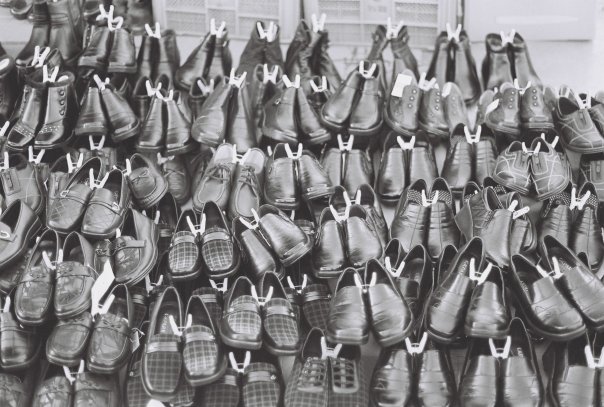
“Men’s shoes on a market stall in South Korea” by Archivillian is licensed under CC BY-SA 4.0.
 Footwear Finesse
Leave a comment